
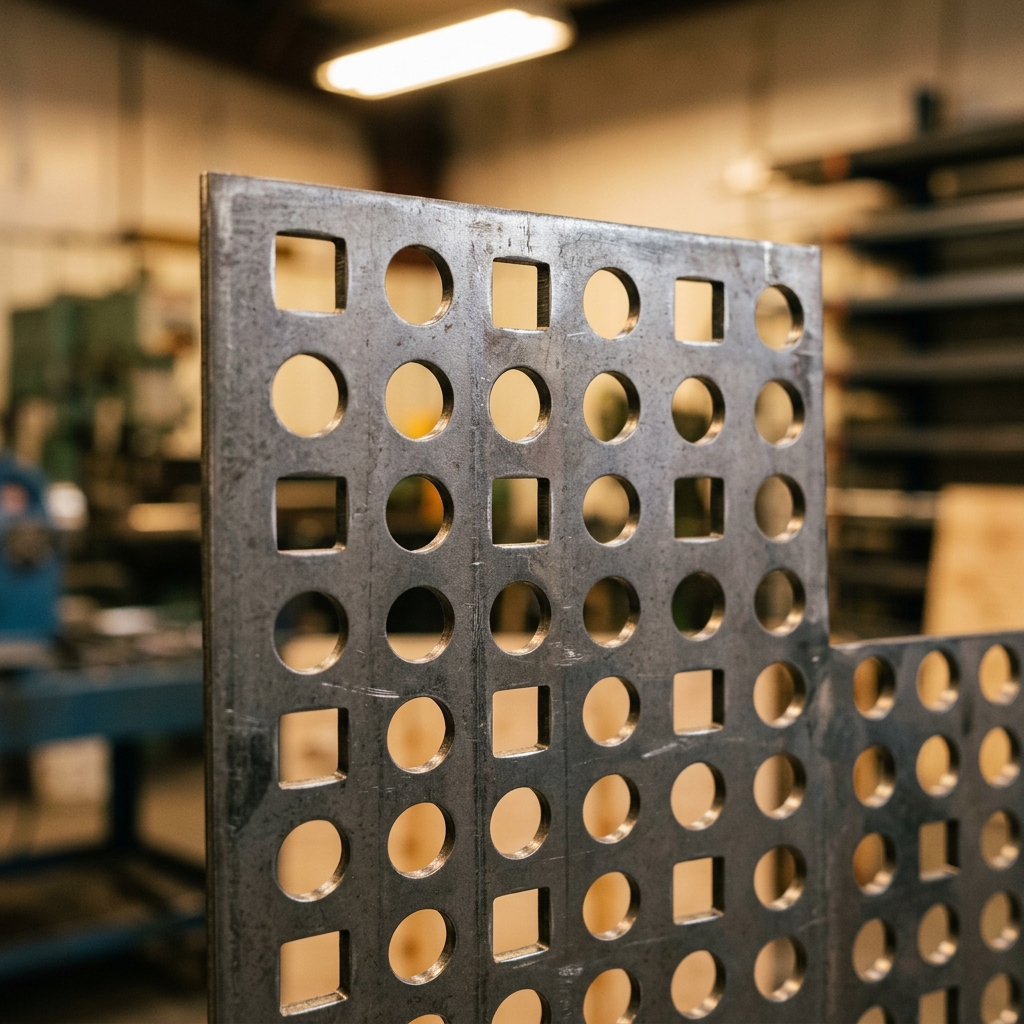
Choosing the right MS perforated sheets for an industrial or architectural project comes down to understanding a surprisingly wide range of specifications, hole pattern, opening size, sheet thickness, and material grade, all of which affect performance in ways that aren't always obvious at first glance. Getting these specifications wrong can mean inadequate airflow, poor filtration efficiency, or a finished product that simply doesn't hold up under load.
This guide walks fabricators, contractors, and industrial buyers through the full range of MS perforated sheets available, from hole patterns to sizing considerations, so you can specify the right product for filtration, ventilation, or architectural applications with confidence.
What Are MS Perforated Sheets: The Basics
MS perforated sheets are mild steel sheets manufactured with a systematic pattern of holes or openings punched through the material, creating a lightweight yet structurally functional product used across countless industrial and architectural applications. Unlike wire mesh, which is woven or welded from individual strands, perforated sheets start as a single solid sheet with material precisely removed to create the desired pattern.
This manufacturing approach gives perforated sheets a distinct rigidity and clean, uniform appearance that wire mesh alternatives can't replicate, making them particularly well suited to applications requiring both strength and a controlled, engineered opening pattern.
Perforated Sheet Manufacturer India: What Sets Quality Apart
Working with an established perforated sheet manufacturer India businesses trust matters significantly, since punching precision, material consistency, and edge finishing all directly affect the final product's performance and appearance. Manufacturers using modern CNC punching equipment achieve tighter tolerances and more consistent hole spacing than older mechanical punching methods, resulting in a more uniform, professional-grade finished sheet.
Sourcing from a manufacturer producing a wide range of wire and sheet metal products rather than a narrow single-product supplier often means better quality control processes carried over from their broader manufacturing experience, along with more flexibility in customizing sheets to specific project requirements.
Perforated Metal Sheet Types: Understanding Your Options
Perforated metal sheet types vary primarily by base material and finish, each suited to different application environments:
- Mild steel (MS) perforated sheets — The most common and cost-effective option, suitable for general industrial applications where extreme corrosion resistance isn't critical.
- Galvanized perforated sheets — MS sheets coated with zinc for improved corrosion resistance, ideal for outdoor or humid environments.
- Stainless steel perforated sheets — Higher cost but superior corrosion resistance, commonly used in food processing, chemical, or marine applications.
- Aluminum perforated sheets — Lightweight option favored for architectural applications where weight is a significant consideration.
Selecting the right base material upfront prevents costly premature replacement due to corrosion or material fatigue in environments the wrong material simply wasn't designed to handle.
Perforated Sheet Hole Patterns: More Than Just Aesthetics
Perforated sheet hole patterns significantly affect both function and appearance, and choosing the right pattern depends heavily on your specific application:
- Round hole pattern — The most common and versatile pattern, offering good open area percentage for filtration and ventilation.
- Square hole pattern — Provides a different aesthetic and slightly different flow characteristics, often chosen for architectural applications.
- Slotted hole pattern — Elongated openings useful for applications requiring directional airflow or drainage.
- Decorative patterns — Custom shapes including hexagons, diamonds, or artistic designs used primarily in architectural cladding and screening.
Beyond the shape itself, hole arrangement, whether straight (aligned in rows) or staggered (offset between rows), also affects both the sheet's structural strength and its open area percentage, with staggered patterns generally offering better strength-to-open-area ratios.
MS Perforated Sheet Price: Factors That Affect Cost
Understanding what drives MS perforated sheet price helps you budget accurately and compare supplier quotes fairly. Key cost factors include sheet thickness, hole diameter and spacing (which determines open area percentage), base material grade, and total sheet dimensions.
Sheets with higher open area percentages, meaning more material removed relative to the solid sheet, sometimes cost more due to increased punching time, despite using less raw material overall. Requesting quotes that clearly break down these variables helps ensure you're comparing genuinely equivalent products rather than sheets with meaningfully different specifications disguised behind a similar price point.
Perforated Sheet for Filtration: Precision Matters
Perforated sheet for filtration applications demands particularly tight tolerances, since hole size directly determines what particle sizes the sheet will capture or allow through. Filtration applications typically require smaller, more precisely spaced holes than ventilation or architectural uses, along with consistent material thickness to ensure uniform performance across the entire sheet surface.
Industries relying on perforated sheets for filtration, including food processing, mining, and industrial screening applications, generally specify exact open area percentages and hole tolerances as part of their procurement requirements, making manufacturing precision a genuine priority rather than a secondary consideration.
Round Hole Perforated Sheet: The Industry Standard
The round hole perforated sheet remains the most widely specified option across industries, and for good reason. Round holes distribute stress evenly around each opening, reducing the risk of cracking or tearing compared to sharper-edged hole shapes, while also offering excellent, predictable airflow and light transmission characteristics.
This combination of structural reliability and functional versatility makes round hole perforated sheets the default choice for general ventilation, filtration, and screening applications unless a project has specific aesthetic or flow requirements pointing toward an alternative pattern.
Perforated Sheet Industrial Uses: Where They Actually Get Used
Perforated sheet industrial uses span a remarkably broad range of sectors:
- Filtration and screening in mining, food processing, and chemical industries.
- Ventilation panels for machinery enclosures, HVAC systems, and industrial buildings.
- Acoustic paneling, where perforation patterns help absorb and diffuse sound.
- Machine guards and safety screens, providing protection while maintaining visibility and airflow.
- Conveyor and processing equipment components requiring controlled material flow.
This versatility across such different functional requirements is precisely why perforated sheets remain a staple specification across manufacturing, construction, and industrial design sectors.
Perforated Metal Sheet Sizes: Standard Dimensions to Know
Perforated metal sheet sizes typically follow standard sheet dimensions common to the broader steel industry, though custom sizing is generally available for specific project requirements. Sheet thickness commonly ranges from thin gauge material suited to lightweight architectural applications up to heavier gauge sheets designed for structural or high-wear industrial uses.
Hole diameter selection should align with your specific application: smaller diameters (under 5mm) suit fine filtration and security applications, mid-range diameters (5mm to 15mm) work well for general ventilation, and larger diameters serve decorative or high-airflow architectural purposes. Reviewing a supplier's manufacturing capabilities and quality standards can confirm they offer the specific size range your project requires.
Perforated Sheet for Ventilation: Balancing Airflow and Strength
Perforated sheet for ventilation applications requires balancing open area percentage against structural integrity, since more open area improves airflow but reduces the sheet's overall strength. Typical ventilation applications use open area percentages between 40 and 60 percent, offering strong airflow performance while maintaining sufficient structural rigidity for panel mounting and handling.
Getting this balance right matters particularly for equipment enclosures and building ventilation systems, where inadequate airflow can lead to overheating, while excessive perforation can compromise the panel's ability to protect internal components from debris or impact.
Perforated Sheet Fabrication: What to Expect in the Process
Understanding perforated sheet fabrication helps set realistic expectations for lead times and customization options. The process typically begins with selecting base sheet material and thickness, followed by CNC or mechanical punching to create the specified hole pattern, and finishing steps like edge deburring and, where required, galvanizing or powder coating.
Custom fabrication requests, including non-standard hole patterns or sheet dimensions, generally require longer lead times than standard stock patterns, making it worthwhile to plan procurement timelines accordingly for projects with specific architectural or engineering requirements.
Frequently Asked Questions
1. What's the difference between MS perforated sheets and stainless steel perforated sheets?
MS perforated sheets are more cost-effective and suitable for general industrial use, while stainless steel offers superior corrosion resistance, making it better suited for food processing, chemical, or marine environments.
2. Which hole pattern is best for ventilation applications?
Round hole patterns are generally the industry standard for ventilation, offering reliable airflow performance combined with even stress distribution across the sheet.
3. How does open area percentage affect a perforated sheet's strength?
Higher open area percentages improve airflow and reduce weight but decrease the sheet's overall structural strength, so applications requiring both airflow and durability need a carefully balanced specification.
4. Can perforated sheets be customized for specific hole patterns or sizes?
Yes, most manufacturers offer custom fabrication for specific hole patterns, sizes, and sheet dimensions, though custom orders typically require longer lead times than standard stock patterns.
5. Are galvanized perforated sheets necessary for outdoor applications?
Generally yes, galvanized or stainless steel perforated sheets offer significantly better corrosion resistance than untreated mild steel, making them the better choice for outdoor or high-humidity environments.
Final Thoughts on Choosing MS Perforated Sheets
Selecting the right MS perforated sheets comes down to matching hole pattern, material grade, and open area percentage precisely to your application's functional requirements, whether that's filtration precision, ventilation airflow, or architectural aesthetics. Working with an experienced manufacturer who can guide these specification decisions ensures your project gets a perforated sheet solution built for genuine, long-term performance rather than a generic, one-size-fits-all product.