
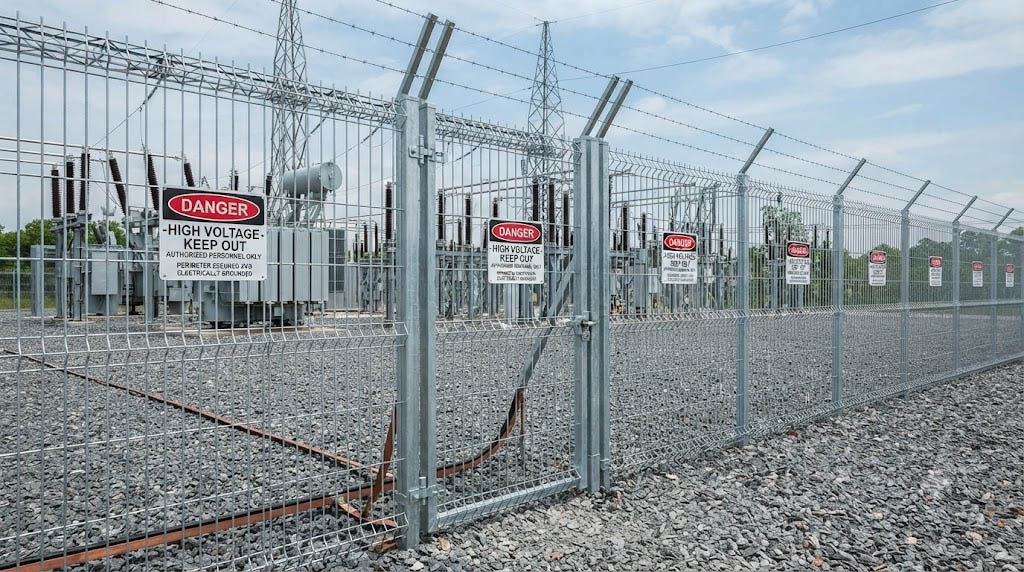
Power Plant and Substation Fencing: Electrical Safety and Perimeter
Standards
Power plant and substation fencing exists to keep
unauthorized people away from live electrical equipment while giving utility
staff controlled, monitored access. Because a breach at a substation can be
fatal within seconds, this fencing is treated as a safety system first and a
security system second, and it is built to standards set by electricity
regulators, not just general industrial fencing guidelines.
Why Electrical Safety Standards Shape Substation Fencing
Power infrastructure fencing is governed by rules that go
beyond typical perimeter security. In India, the Central Electricity
Authority's safety regulations set minimum clearance and enclosure requirements
for substations and generating stations, while international codes such as IEC
61936 cover safety standards for AC installations above 1 kV. These rules exist
because the danger at a substation is different from a typical industrial site.
Arc flash risk, step-and-touch voltage near grounded equipment, and
high-voltage proximity mean a fence is not just a deterrent—it is often the
only physical barrier stopping someone from entering a zone where standing too
close to live equipment can be lethal. Power plant and substation fencing is
therefore specified with height, mesh spacing, and warning signage requirements
written directly into the safety plan, not added afterward.
This is also why substation fencing projects rarely move as
fast as a standard commercial fencing job. Every specification change—a
different mesh size, a lower fence height near a walkway, an added gate—usually
needs to be checked against the site's electrical safety plan before it can be
approved. Utilities that bring their fencing supplier into these conversations
early, rather than handing over a finished drawing, tend to avoid costly rework
once a safety officer flags a clearance issue during final inspection.
Key Requirements for Substation Perimeter Security
A compliant substation boundary fencing solution generally
needs to address several requirements at once, since electrical safety and
physical security overlap here more than in most industrial settings.
- Minimum
fence height sufficient to prevent both climbing and any inadvertent
approach toward energized equipment
- Anti-climb
fencing for substations with mesh apertures too small for hand or foot
holds
- Grounding
and bonding of metal fencing sections near high-voltage equipment, so the
fence itself cannot become an electrical hazard
- Clearly
marked restricted access fencing for electrical facilities, with warning
signage at regular intervals along the boundary
- Gate
and access-point hardware that supports lockout-tagout procedures for
utility staff
Because these requirements combine electrical engineering
and physical security, substation fencing projects usually need sign-off from
both a facility's safety officer and its security team before installation
begins.
Types of Fencing Used at Power Plants and Substations
Utilities and independent power producers typically choose
from a narrow set of fencing types that satisfy both safety and security needs
when specifying power plant and substation fencing for a new or upgraded site.
- High-voltage
security fencing with anti-climb welded mesh is the standard choice
for the outer perimeter, since it resists intrusion while allowing clear
sightlines for CCTV and patrol staff.
- Galvanized
steel fencing for substations is preferred over painted alternatives
because galvanizing resists the corrosion that comes from years of outdoor
exposure without needing frequent recoating near live equipment.
- Perimeter
intrusion detection fencing, which pairs a physical fence with sensor
cabling or vibration detection, is increasingly used at critical
infrastructure fencing sites where a breach needs to trigger an alarm
immediately rather than being caught on a later patrol.
- Razor
wire fencing for substations is added at especially sensitive sites,
such as transmission hubs feeding critical loads like hospitals or data
centers, where an extra deterrent layer is justified.
Fencing for transmission and distribution stations further
down the grid, away from the main generating plant, can often use a lighter
specification than fencing around a large power plant, since the equipment risk
and asset value differ significantly between the two.
Renewable energy sites add another layer of variation.
Fencing for renewable energy sites such as solar farms and wind substations
often covers far more perimeter length than a conventional substation, which
shifts the priority toward cost-efficient, easy-to-install fencing that still
meets the same grounding and clearance rules near inverter and transformer
stations.
Choosing a Fencing Manufacturer for Power Utilities
Utilities planning new substations or upgrading power
utility security infrastructure at existing sites should evaluate suppliers on
more than cost per meter. Useful questions to ask include:
- Has
the manufacturer supplied compliance fencing for electrical utilities that
has passed CEA or equivalent regulatory inspection before?
- Can
they document grounding and bonding methods for metal fencing sections
near energized equipment?
- Do
they offer galvanized or otherwise corrosion-resistant options suited to
the site's climate and exposure?
- Can
they support long, continuous boundary runs without inconsistent panel
quality across a large site?
Arihant Fence supplies security and safety perimeter fencing
for industrial, energy, and utility sites across Mumbai, Thane, Navi Mumbai,
Pune, Nashik, and Nagpur, with anti-climb and corrosion-resistant options
suited to demanding operating environments.
Maintaining Fencing Around Live Electrical Equipment
Fencing around a substation cannot be treated as a
fit-and-forget asset. Ground settlement, vegetation growth, and corrosion near
grounding points can all quietly compromise a power plant and substation
fencing system over time, even when it looked compliant at installation.
Utilities that build fence inspection into their routine
electrical safety audits—checking grounding continuity, mesh integrity, and
gate interlocks—catch these issues before they become safety incidents or
regulatory findings.
Working with a fencing manufacturer that understands both
electrical safety fencing standards and physical security helps utilities avoid
a common gap: fencing that is structurally strong but was never properly bonded
or grounded, which can turn a safety asset into a hazard during a fault
condition.
Frequently Asked Questions
- What
makes substation fencing different from regular industrial fencing? Substation
fencing must account for electrical hazards like arc flash and
step-and-touch voltage, not just physical intrusion. This means grounding
and bonding requirements, minimum clearance distances from live equipment,
and warning signage that standard industrial fencing does not typically
require.
- How
high should power plant perimeter security fencing be? Exact height
requirements depend on the applicable electrical safety code and the
voltage level of the equipment being protected, so utilities should
confirm requirements with their safety regulations rather than applying a
single standard height across all sites. A qualified fencing supplier can
help translate those code requirements into a buildable specification, and
can also advise on how height interacts with mesh spacing and grounding
near the fence line.
- Does
substation fencing need to be grounded? Yes, in most cases. Metal
fencing installed near high-voltage equipment typically needs proper
grounding and bonding so the fence cannot become energized during a fault
condition. This is one of the key differences between substation fencing
and general perimeter fencing, and it is usually verified as part of the
site's commissioning tests before the facility goes live.
Talk to a Power Infrastructure Fencing Specialist
If your utility needs power plant and substation fencing
that meets electrical safety and perimeter security standards, Arihant Fence
can help design a compliant, site-specific solution. Call +91 6282249224
to discuss your power plant or substation's fencing requirements.