
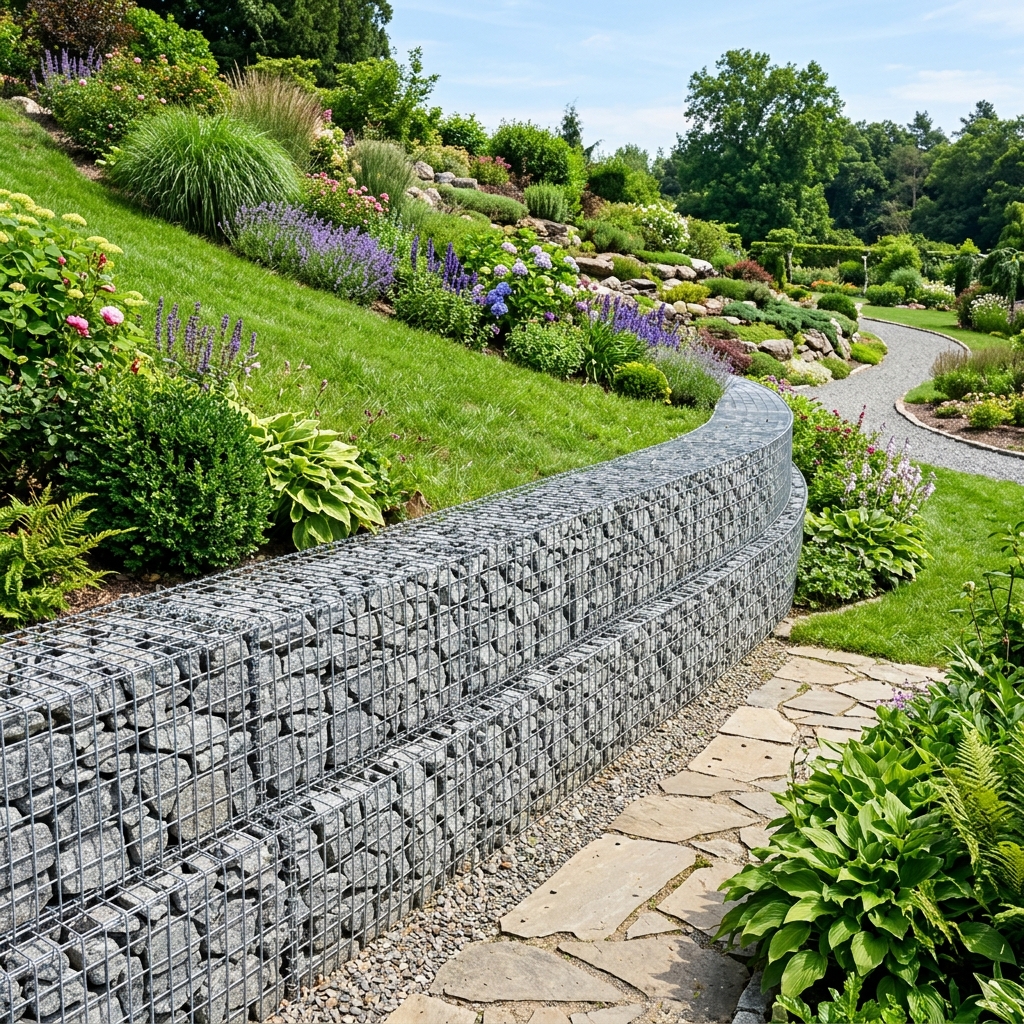
For civil engineers, contractors, and landowners dealing with slope instability or erosion, gabion wire mesh for retaining walls offers one of the most durable and cost-effective solutions available. Unlike rigid concrete structures, gabion walls flex naturally with ground movement, drain water freely, and often outlast conventional retaining methods, all while blending into the surrounding landscape. This guide covers everything from cost and material specifications to the actual installation process, helping you decide whether gabion retaining walls are the right fit for your erosion control, slope stabilization, or landscaping project.
What Gabion Wire Mesh for Retaining Walls Actually Is
Gabions are rectangular wire mesh baskets, typically constructed from galvanized or PVC coated steel wire, that are filled with stone or rock at the project site to create flexible, permeable structures. Unlike poured concrete, gabion retaining walls are essentially modular, allowing water to pass through the structure naturally rather than building up hydrostatic pressure behind a solid barrier. This permeability is precisely what makes gabion wire mesh for retaining walls so effective for slope stabilization, riverbank protection, and road embankments, where drainage is just as critical as structural strength.
Benefits of Gabion Retaining Walls Over Traditional Methods
The benefits of gabion retaining walls extend well beyond initial cost savings. Key advantages include:
- Natural drainage — Water passes freely through the stone-filled structure, reducing pressure buildup that often damages solid concrete walls.
- Flexibility — Gabion structures can shift slightly with ground movement without cracking, unlike rigid concrete.
- Faster installation — No curing time is required, unlike poured concrete, which can take weeks to fully set.
- Environmental integration — Gabion walls allow vegetation to take root within the stone fill over time, blending into natural landscapes.
- Long service life — Properly galvanized or PVC coated gabion mesh resists corrosion for decades, even in wet or coastal conditions.
- Lower long — term maintenance - Minimal upkeep is required once the structure is properly installed and settled. These characteristics make gabion walls a preferred choice for engineers working on projects where both durability and adaptability matter.
Gabion Box for Retaining Wall: Understanding the Components
A gabion box for retaining wall construction consists of a rectangular wire mesh cage, most commonly using hexagonal woven mesh or welded square mesh, divided internally with diaphragms for added structural stability. These boxes are manufactured in standard sizes, though custom dimensions are available depending on project requirements. The mesh wire diameter and coating type directly affect the gabion's lifespan and load-bearing capacity, which is why sourcing from an established wire mesh manufacturer with proper galvanization processes matters significantly for long-term performance.
Gabion Wire Mesh Price in India: What Affects the Cost
Gabion wire mesh price in India depends on several interconnected factors, making it difficult to quote a single flat rate without understanding your specific project needs:
- Mesh wire gauge — Thicker wire diameter increases both cost and durability.
- Coating type — PVC coated mesh typically costs more than standard galvanized mesh but offers better corrosion resistance in humid or coastal environments.
- Gabion box dimensions — Larger custom sizes affect material quantity and pricing.
- Stone fill sourcing — Whether stone is sourced locally near the project site or transported affects overall project cost significantly.
- Project scale — Bulk orders for large retaining wall projects typically secure better per-unit pricing than smaller orders. Requesting an itemized quote that separates mesh cost from stone fill and labor helps you understand exactly where your budget is being allocated.
Gabion Retaining Wall Cost: Budgeting for Your Project
Understanding gabion retaining wall cost as a complete project, not just the mesh material, is essential for accurate budgeting. Total project cost typically includes the wire mesh baskets themselves, stone or rock fill (often the largest cost component depending on local sourcing), site preparation and excavation, and labor for assembly and stone placement. Compared to poured concrete retaining walls, gabion structures are frequently more cost-effective overall, particularly for larger projects, since they eliminate the need for expensive formwork, curing time, and specialized concrete labor.
Gabion Wall Installation Process: Step by Step
Understanding how to install gabion retaining wall structures helps engineers and contractors plan realistic project timelines. The typical gabion wall installation process follows these steps:
- Site preparation — Excavate and level the foundation area, ensuring proper drainage planning behind the wall.
- Base layer placement — Position the first row of empty gabion baskets along the prepared foundation.
- Assembly and bracing — Connect adjoining baskets using lacing wire or fasteners, adding internal bracing wires to maintain shape during filling.
- Stone filling — Fill baskets with appropriately sized stone, typically larger than the mesh openings to prevent loss, packing tightly to minimize voids.
- Lid closure and stacking — Close and secure the lid of each basket before stacking subsequent rows, often with a slight setback for added stability.
- Backfilling — Complete backfilling behind the structure with proper drainage material to support long-term wall performance. Following this sequence carefully, particularly proper bracing and tight stone packing, directly affects the wall's long-term structural integrity.
Gabion Wire Mesh for Erosion Control: Beyond Retaining Walls
Beyond formal retaining walls, gabion wire mesh for erosion control plays a critical role in riverbank stabilization, coastal protection, and drainage channel lining. The same permeable, flexible structure that makes gabions effective for retaining walls also allows them to absorb the energy of moving water without failing catastrophically, unlike rigid concrete barriers that can crack under repeated hydraulic pressure. This makes gabion systems particularly valuable in Maharashtra's monsoon-affected regions, where seasonal flooding and heavy rainfall place significant stress on unprotected slopes and riverbanks.
Gabion Baskets for Slope Protection: A Practical Application
Gabion baskets for slope protection are widely used on road embankments, hillside developments, and construction sites where soil erosion threatens structural stability. Layered gabion baskets create a stepped, terraced structure that slows water runoff while holding soil in place, often allowing natural vegetation to establish within the stone fill over time for additional reinforcement. This combination of engineered structure and natural integration makes gabion slope protection a popular choice for infrastructure projects across varied terrain.
Gabion Wall vs Concrete Retaining Wall: Making the Right Choice
The gabion wall vs concrete retaining wall decision ultimately depends on your project's specific requirements. Concrete offers a smoother, more uniform appearance and can be preferable for urban settings where aesthetics matter most, but it requires more extensive formwork, longer curing time, and doesn't handle ground movement or drainage as gracefully as gabion structures. Gabion walls, by contrast, excel in projects requiring flexibility, natural drainage, and faster construction timelines, making them the stronger choice for erosion control, rural infrastructure, and slope stabilization projects specifically. For a supplier with experience across multiple wire mesh and fencing applications, reviewing their manufacturing background can help confirm they have genuine technical capability beyond a single product line.
Gabion Mesh Manufacturer India: What to Look for in a Supplier
Choosing the right gabion mesh manufacturer India offers matters as much as the design itself. Prioritize suppliers who provide:
- Clear specifications on wire gauge, mesh type, and coating
- Consistent quality control across production batches
- Experience supplying commercial, industrial, and road infrastructure projects
- Transparent pricing that separates mesh cost from installation and stone fill Manufacturers who also produce related wire fencing and mesh products often bring broader technical expertise to gabion projects, since the underlying wire treatment and quality control processes overlap significantly across product lines.
Frequently Asked Questions
1. How long do gabion retaining walls typically last?
Properly galvanized or PVC coated gabion walls can last several decades, with lifespan depending heavily on wire coating quality, water exposure, and correct installation practices.
2. Is gabion wire mesh more expensive than a standard concrete retaining wall?
Not usually; gabion structures are often more cost-effective than poured concrete, particularly for larger projects, since they avoid formwork, curing time, and specialized concrete labor costs.
3. Can gabion retaining walls be used in high-rainfall areas like Maharashtra?
Yes, gabion walls are particularly well suited to monsoon-affected regions, since their permeable structure allows water to drain naturally, reducing the pressure buildup that damages solid barriers.
4. What size stones are needed to fill a gabion basket?
Stone size should generally be larger than the mesh openings to prevent loss through the wire, with exact sizing depending on the specific mesh gauge and hole dimensions used.
5. Do gabion walls require ongoing maintenance?
Gabion walls generally require minimal maintenance once properly installed and settled, though periodic inspection for wire corrosion or displaced stone is recommended, particularly in coastal or high-moisture environments.
Final Thoughts on Gabion Wire Mesh for Retaining Walls
Gabion wire mesh for retaining walls offers a genuinely practical balance of durability, drainage, and cost-efficiency that's difficult to match with traditional concrete construction. Whether you're managing erosion control, slope stabilization, or a full-scale infrastructure project in Maharashtra, understanding the installation process and cost drivers upfront ensures you choose the right specifications and supplier for a structure built to last.